Staircases
How Much Does a Stair Renovation Cost in Toronto? (Per-Step Pricing 2026)
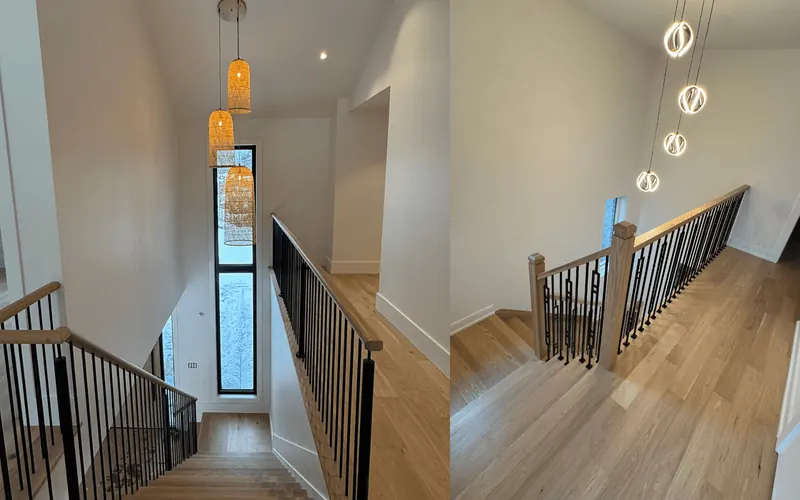
A stair renovation in Toronto costs about $150 to $350 per step in 2026. A typical 12–14 step staircase lands between $2,500 and $5,000 for new hardwood treads and risers, installed and finished. Railings, landings and structural repairs are extra, and they're what push some staircases well past that range.
As with our hardwood flooring cost guide, these are planning numbers for budgeting, not a quote for your specific stairs.
What does a per-step price include?
Every step has two visible parts: the tread you stand on and the riser, the vertical board at the back. Both sit on stringers, the angled boards that carry the staircase. A per-step price usually covers:
- Removing carpet, tack strip and staples, or the old treads
- A new hardwood tread with a finished nosing
- A new riser, either paint-grade or hardwood to match
- Fitting, adhesive and fasteners
- Stain and finish on site, or prefinished treads matched to your floor
Usually not included: railing and spindle work, landings (priced like flooring, by the square foot), stringer repairs, and painting walls or skirt boards.
Why doesn't 13 steps × $150 equal my quote?
Because a staircase is more than its steps. The top nosing where the stair meets the upper floor, any landing, the transition at the bottom, minimum charges for finishing, and the setup and protection a stair job needs all sit on top of the per-step number. That's why most real Toronto staircases land in the $2,500–$5,000 range even when the per-step rate is at the low end.
What makes a stair renovation cost more or less?
Cap-and-replace vs. full rebuild
Most stair renovations are cap-and-replace: the existing structure stays, the old surface comes off, and new hardwood treads and risers go on top. It's the fastest option and sits in the per-step range above. A full rebuild means replacing stringers or changing the layout. That's structural carpentry, priced as a custom project, and it can involve a permit. Your contractor should tell you which one your stairs need, and why.
Open or closed sides
A closed staircase between two walls is the simplest. Open sides need returned nosings, finished tread ends that wrap around the side, which adds labour to every exposed step.
Winders and curves
Pie-shaped winder steps at a turn have to be templated and cut individually. Expect them at the top of the per-step range or above it.
Species and finish
White and red oak are the most common. Matching a new engineered floor usually means site-staining oak treads to the floor's colour. Walnut and other premium species cost more per tread.
Railings
Swapping wood spindles for metal balusters, or replacing posts and handrails, is quoted separately. It's often worth doing at the same time, because the railing has to come off or be worked around anyway.
Can you refinish stairs instead of replacing them?
Sometimes. If your treads are solid hardwood in decent shape and you only want a fresh finish or a new stain colour, sanding and refinishing costs less than new treads.
But in many GTA homes built in the last few decades, the stairs under the carpet were never meant to be seen. They're often construction-grade wood or particleboard. Those can't be sanded into a finished stair; they need new hardwood caps. Pull back a corner of the carpet on one step and you'll usually know.
How long does a stair renovation take?
A cap-and-replace on a standard staircase typically takes two to four working days, including stain and finish. Site-finished stairs can be done in stages, every other step at a time, so the stairs stay usable while coats cure. A full rebuild takes longer, often a week or two, depending on carpentry and inspections.
Should you renovate stairs at the same time as new floors?
In most cases, yes. Doing both together means:
- A clean match. Treads stained to the new floor, installed by the same crew.
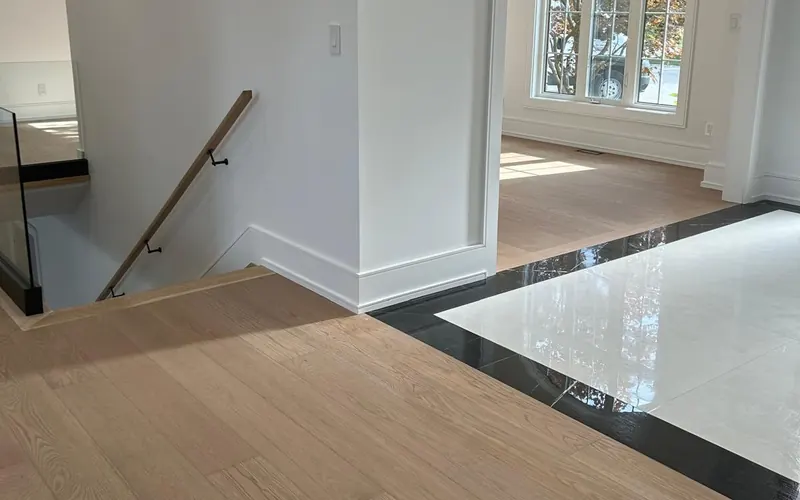
- A proper top transition. The flush nosing where the upper floor meets the stair is fitted once, correctly.
- One disruption. One round of dust, one round of protection, one schedule.
As a rough example, a 900 sq ft main floor ($7,200–$16,200 installed) plus a 13-step staircase ($2,500–$5,000) puts a combined project around $10,000–$21,000 before new baseboards. Trim is a small line that makes the whole thing look finished; see baseboard and trim installation cost.
Before you hire, read how to choose a flooring contractor in Toronto. Stairs are where workmanship shows most. When you're ready, ask us for a stair quote.
Frequently asked questions
How much does it cost per step to redo stairs in Toronto?
About $150–350 per step in 2026 for new hardwood treads and risers, installed and finished. A typical 12–14 step staircase costs $2,500–$5,000 once the top nosing, landing and finishing are included.
Can I refinish my stairs instead of replacing them?
If the treads are solid hardwood in good condition, yes, and it costs less. If they were built to sit under carpet (common in GTA builder homes), they need new hardwood treads instead.
How long does a stair renovation take?
Two to four working days for a cap-and-replace on a standard staircase, including finishing. Full rebuilds with new stringers take longer, often one to two weeks.
Can new stairs match my new hardwood floors?
Yes. Oak treads can be site-stained to match an engineered floor, or prefinished treads can be ordered to match. It's easiest when the stairs and floor are done by the same crew at the same time.
Do I need a permit to renovate my stairs?
Replacing treads and risers on an existing structure is generally cosmetic. Structural changes, like replacing stringers or changing the stair layout, may need a permit. Confirm with your contractor or the City of Toronto before work starts.