Staircases
Carpet to Hardwood Stairs in Toronto: Cost, Process & Timeline (2026)
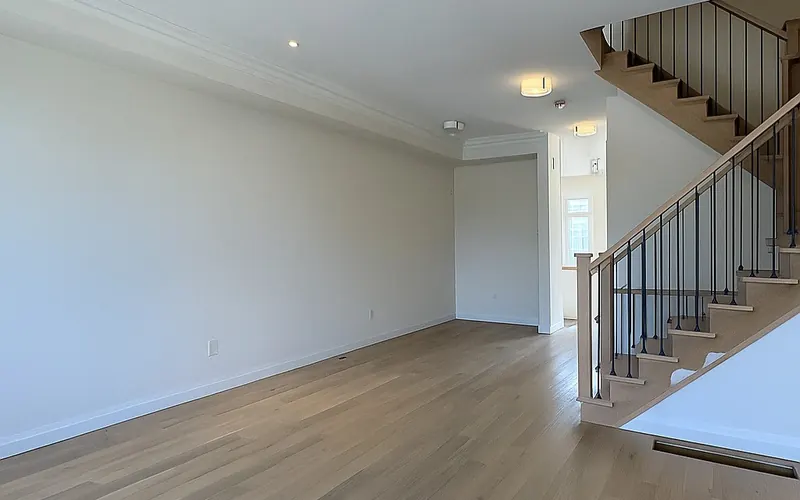
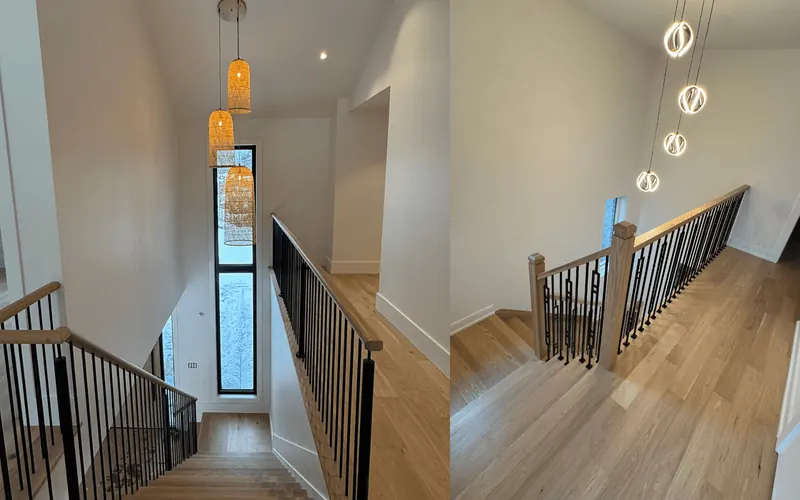
Converting carpeted stairs to hardwood in Toronto costs about $150 to $350 per step in 2026. For a typical 12–14 step staircase, that's $2,500–$5,000 for new hardwood treads and risers, carpet removal, installation and finish. Most staircases take two to four working days, and they stay usable for most of the job. Railings, landings and any structural repairs are priced separately.
These are the same planning numbers as our stair renovation cost guide. This guide focuses on the most common version of that job: taking carpet off and putting hardwood on.
What's under the carpet on Toronto stairs?
This is the question that decides your options. Pull back the carpet on one step, ideally a low one where the tack strip is easy to lift, and you'll usually find one of three things:
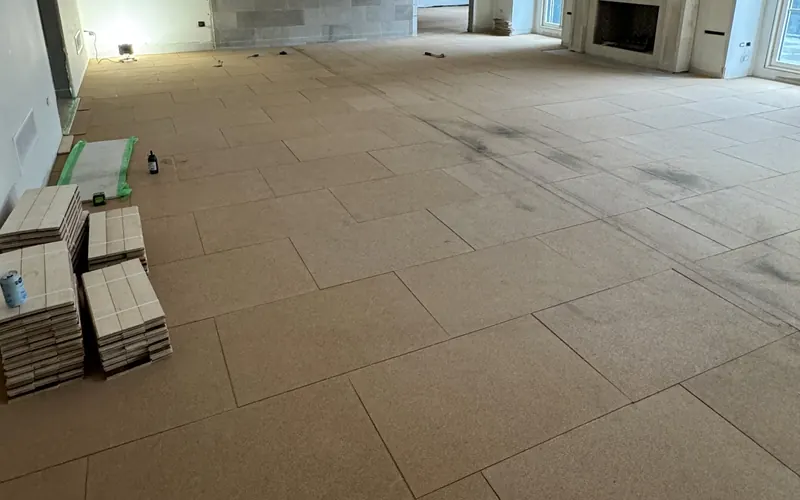
- Plywood, OSB or particleboard treads. The most common in GTA houses built from the 1980s on. These were never meant to be seen and can't be sanded into a finished stair.
- Construction-grade pine or spruce. Real wood, but soft, knotty and usually full of staple holes. It's rarely worth refinishing.
- Hardwood treads. Common in older Toronto homes where carpet was added later. These can sometimes be refinished.
Whatever is there, expect a row of nail holes from the tack strip along the back of each tread and staple holes along the nosing. On hardwood treads, those holes can be filled, but they'll often still show after finishing.
How much does carpet-to-hardwood stairs cost per step?
The $150–350 per step range typically covers removing the carpet, pad, tack strip and staples; a new hardwood tread with a finished nosing; a new riser (paint-grade or hardwood); and stain and finish. Where you land in that range depends on species, open or closed sides, winder steps and whether the treads are site-finished or prefinished.
A 13-step staircase at $150 a step is under $2,000, yet most quotes come in at $2,500 or more. The difference is the top nosing, landings, the bottom transition, and the setup and protection a stair job needs. That's why the typical range is $2,500–$5,000.
Should you cap over the old treads or replace them?
There are two ways to put hardwood on a carpeted staircase:
- Cap-over. The overhanging nosing of each old tread is cut flush with the riser, and a new hardwood tread "cap" is glued and fastened on top. New risers cover the old ones. It's fast, keeps the original structure, and is the usual choice when the stairs are solid and squeaks are minimal.
- Full tread and riser replacement. The old treads and risers come off completely, and new solid hardwood treads go directly on the stringers. It costs more, toward the top of the per-step range, but it's the right call when old treads are damaged, badly out of level, or squeaking because they've worked loose.
Both keep the stair's footprint. Moving or replacing stringers is a structural rebuild, which is priced as its own project and may need a permit.
Can new hardwood stairs match the floors on each level?
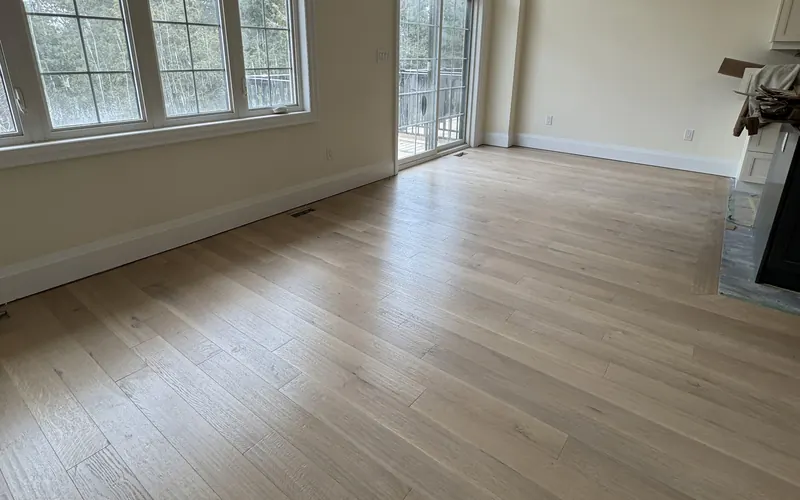
Yes, and that's the main reason to plan stairs together with your floors. Oak treads can be site-stained to match a new engineered floor, or prefinished treads can be ordered in a matching colour. If the main floor is getting hardwood but upstairs is staying carpeted, the stairs should match the main floor. The top step then becomes the transition, finished with a flush nosing or a clean carpet edge.
Planning both at once? Our hardwood flooring cost guide shows how stairs fit into the overall budget tiers.
What nosing details should you decide before the job?
- Nosing profile: a rounded bullnose is classic and softer underfoot; a square or eased edge reads more modern.
- Overhang: new treads typically overhang the riser slightly, like the original stair. Keep it consistent from top to bottom.
- Top landing: a flush stair nose ties the upper floor to the first tread without a raised lip.
- Landings: mid-stair landings are floored like a small room and priced by the square foot.
Are railings and spindles included?
Usually not. Railings are quoted separately. But the railing has to come off or be worked around during the job, so it's the cheapest moment to change it. A common Toronto upgrade is swapping wood spindles for metal balusters while keeping or refinishing the handrail. If your current railing stays, ask how the posts will be protected and whether the tread cuts around them are included.
How long does it take, and can you use the stairs?
Plan on two to four working days for a standard staircase: one day for removal and prep, one to two for installation, and the rest for stain and finish. With site-finished treads, finishing is often done every other step, so the stairs stay usable while coats cure. Prefinished treads cut the finishing time and odour but give you fewer colour options. For how stairs fit around a full flooring job, see how long hardwood installation takes.
Expect some noise and dust. Carpet removal is quick, but cutting nosings and treads is loud. A good crew does most cutting outside or in the garage and keeps dust contained to the stairwell. Ready to price your staircase? Request a quote.
Frequently asked questions
Can you refinish the stairs under my carpet instead of replacing them?
Only if they're solid hardwood in decent condition. Most GTA stairs built to sit under carpet are plywood, OSB, particleboard or construction pine, which need new hardwood treads instead.
How much does it cost per step to convert carpeted stairs to hardwood?
About $150–350 per step in Toronto in 2026, including carpet removal, new treads and risers, and finishing. A typical 12–14 step staircase costs $2,500–$5,000.
How long does it take to replace carpeted stairs with hardwood?
Two to four working days for most staircases. Site-finished treads are usually done in stages so the stairs remain usable.
Can my new hardwood stairs match my new floors?
Yes. Oak treads can be stained on site to match an engineered floor, or prefinished treads can be ordered to match. It's easiest when the floor and stairs are done by the same crew.
Is converting stairs from carpet to hardwood noisy and dusty?
There's some noise from cutting and some dust from removal and finishing. Most cutting can be done outside or in the garage, and dust can be contained to the stairwell.