Comparison
Engineered Hardwood vs Luxury Vinyl (LVP) in Toronto: Which Should You Choose? (2026)
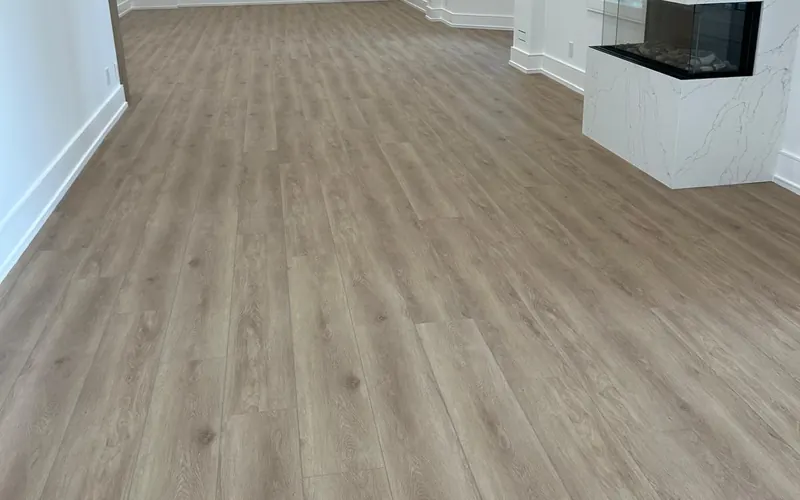
Choose engineered hardwood for main living areas, bedrooms and condos where you want real wood, resale appeal and a floor that can be refinished. Choose luxury vinyl plank (LVP) for basements, bathrooms, laundry rooms, rentals and tight budgets, where water resistance and price matter most. In Toronto in 2026, engineered hardwood runs about $8–18 per sq ft installed, and quality rigid-core LVP roughly $5–10 per sq ft installed.
We install engineered hardwood for a living, so here's the honest version: vinyl is the better floor in some rooms. The trick is knowing which ones.
What's the actual difference between engineered hardwood and LVP?
Engineered hardwood is a real wood floor: a top layer of hardwood (the wear layer, typically 2–6 mm) bonded to a stable plywood or composite core. What you see and touch is wood.
Luxury vinyl plank is a printed image of wood under a clear protective layer, on a vinyl or rigid stone-polymer core. Modern LVP looks convincing from standing height, and the core doesn't swell when it gets wet.
How much does each cost in Toronto?
| 2026 cost | Engineered | LVP |
|---|---|---|
| Material /sq ft | $4–9 | ~$3–6 |
| Installed /sq ft | $8–18 | ~$5–10 |
| 600 sq ft condo | $4,800–$10,800 | ~$3,000–$6,000 |
Both still need subfloor prep where the floor isn't flat ($1–3 per sq ft), and both use the same stairs and trim pricing. The full engineered breakdown is in our hardwood flooring cost guide.
Where does luxury vinyl win?
- Basements. Below-grade concrete in Toronto homes can be damp. LVP's core shrugs off moisture that would make wood cup.
- Bathrooms, laundry rooms and mudrooms. Standing water and wet boots are vinyl's home turf. Seams still aren't a swimming pool, but surface spills won't hurt it.
- Rentals and investment units. Lower cost and easy plank replacement make it the practical choice between tenants.
- Budget-driven projects with pets or young kids. Pet accidents and spilled drinks are less stressful on vinyl, and a damaged plank can be swapped.
Where does engineered hardwood win?
- It's real wood. It feels warmer and more solid underfoot, especially glued down, and it ages like wood rather than wearing like a print.
- It can be refinished. A 3 mm+ wear layer can typically be sanded and refinished at least once. LVP's wear layer can't be; once it's worn or scratched through, the plank is replaced.
- Resale. In Toronto listings, real hardwood is commonly treated as a selling feature, while vinyl is usually described as practical. For the main floor of a house you plan to sell, that matters.
- Main living areas. Living rooms, dining rooms and bedrooms are where you notice look, sound and feel every day.
How long does each floor last?
A well-maintained engineered floor with a 3 mm+ wear layer commonly lasts decades, because it can be refinished when it shows wear. Quality LVP commonly lasts 10–20 years depending on its wear layer and traffic, but when it's done, it's replaced, not renewed. Treat both as planning ranges; maintenance and indoor humidity make a big difference.
How do they compare on feel and sound?
Rigid-core LVP is usually floated, and on concrete it can sound clicky or hollow and feel cooler underfoot. Engineered hardwood, particularly glued down, sounds quieter in your own space and feels more substantial. In a Toronto condo, what your neighbours hear depends mostly on the underlay, which brings up building rules.
Which is better for a Toronto condo?
Both are hard floors, so most condo boards apply the same approval process and acoustic requirements to each. Engineered hardwood is the established choice, with a well-understood path to approval; see our condo engineered hardwood guide. With LVP, check the details: some rigid-core vinyl warranties restrict adding a separate underlay, and an attached pad alone may not meet your building's spec. Get the rules from management before choosing either floor.
Which floor should you choose for each room?
| Room | Our recommendation |
|---|---|
| Living and dining rooms | Engineered hardwood |
| Bedrooms | Engineered hardwood |
| Kitchen | Engineered (LVP in spill zones) |
| Condo main living area | Engineered hardwood |
| Basement | LVP |
| Bathroom, laundry, mudroom | LVP or tile |
| Rental unit | LVP |
Plenty of Toronto homes use both: engineered hardwood on the main and upper floors, vinyl in the basement and wet areas. Whatever you choose, compare quotes line by line using these nine questions. If engineered hardwood is the right fit for your space, tell us about your project.
Frequently asked questions
Is engineered hardwood better than luxury vinyl?
For main living areas, bedrooms and condos where you want real wood and resale appeal, usually yes. For basements, bathrooms, laundry rooms and rentals, luxury vinyl is often the better choice.
How much cheaper is LVP than engineered hardwood in Toronto?
Quality LVP is roughly $5–10 per sq ft installed in 2026, compared with $8–18 for engineered hardwood. On a 600 sq ft condo, that's about $3,000–$6,000 versus $4,800–$10,800.
Is luxury vinyl waterproof?
The planks resist water, which is why LVP suits basements and wet areas. Water that gets under the floor through seams or edges can still cause problems, so spills and leaks should still be dealt with quickly.
Does hardwood add more resale value than vinyl?
Real hardwood is commonly treated as a selling feature in Toronto listings, while vinyl is generally seen as practical. On the main floor of a home you may sell, engineered hardwood is usually the stronger choice.
Can I install luxury vinyl in a Toronto condo?
Usually, with board approval and an underlay that meets the building's acoustic rules. Check that the vinyl's warranty allows the underlay your building requires before you buy.